 INTELLIGENT VISION TECHNOLOGY
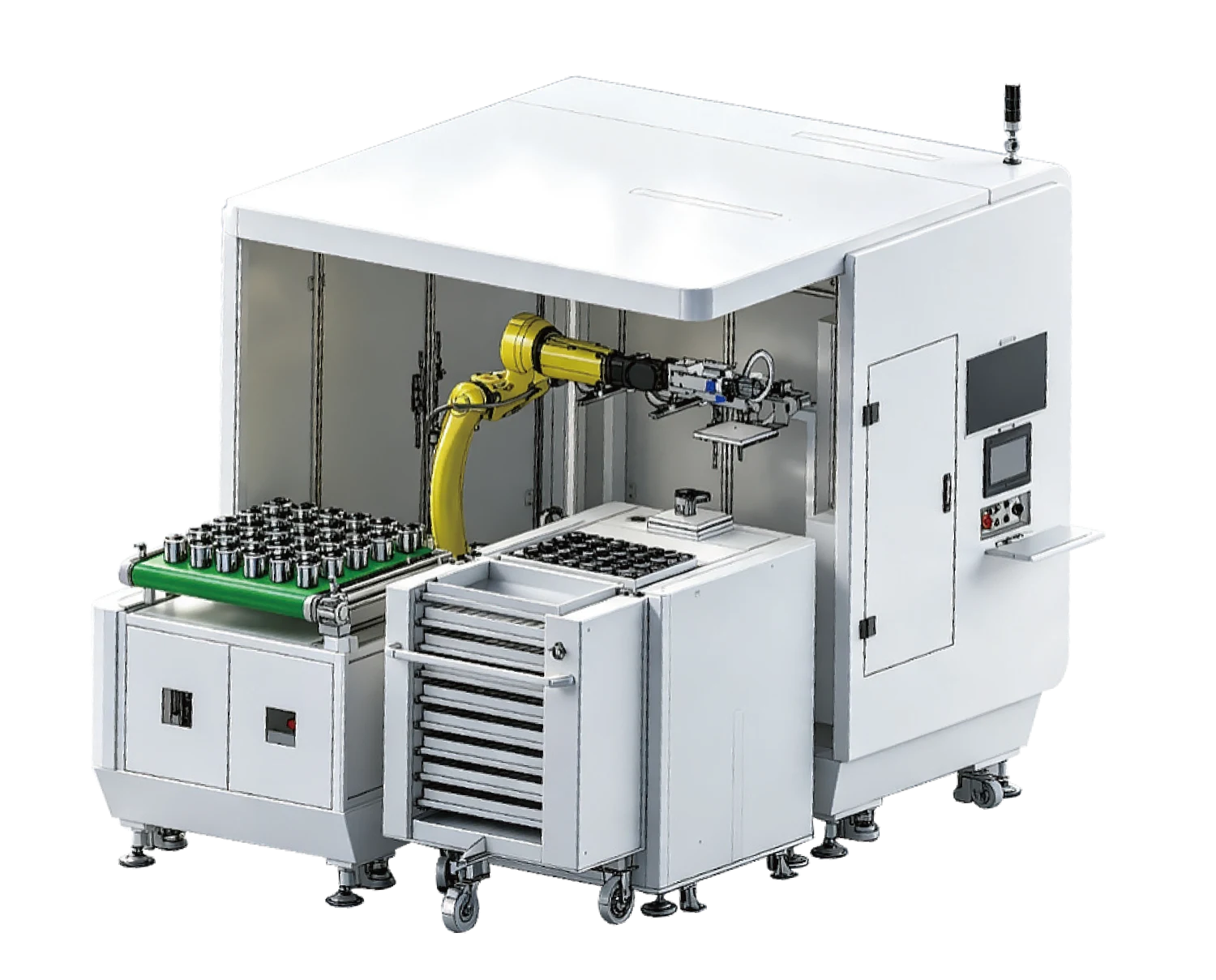
Robotic Handling Inspection System
Machine characteristics
The equipment is equipped with a high-precision six-axis robotic arm paired with a camera and a gripper to grab products, place them on the rotating and fixed inspection tables, avoid inspection blind spots, and automatically distinguish the feeding positions. Users can flexibly plan the inspection trajectory according to the shape of the product.
The equipment turntable design can coordinate with a six-axis robotic arm for movement, supporting multi-angle and multi-directional detection, significantly enhancing detection efficiency.
The device software employs an AI object detection algorithm based on deep learning, featuring a large model for detecting defects on the machining surface.
It can be integrated with MES according to requirements, scan QR codes to save images, and provide image traceability.
The adaptation structure is complex, involving the inspection of multiple products (such as die-casting parts, forged parts, machined parts, injection molded parts, cutting tools, etc.)
Performance parameters
| Camera configuration | 12 MP high-definition camera |
|---|---|
| Inspection accuracy | ±0.05 MM |
| Inspection speed | Estimated 350 ms for robot movement + defect recognition in one image (6 images of the rotating section in 1 second) |
| Machine weight | 800 kg |
| Machine dimensions | 3000×2080×2500 (including three-color signal light) |
| Computer configuration | Industrial-grade computer |
| Feeding mechanism | Manual feeding / robotic arm |
| Inspection items | Scratches, impact damage, dents, pores on machined surfaces, cold shuts, foreign objects trapped in holes, aluminum chips, machining and hole-edge burrs, edge burrs and omitted processes |
| Compatible product range | 30–700 mm |
| Voltage / power | AC 220 V / 380 V, 50/60 Hz; total power 2.5 kW |